Learn
Understand Devi through stories and spiritual meaning
Start with the swaroops, Nava Durga, the Mahavidyas, and beginner-friendly explanations.
Read and learnSacred Gateway
A devotional home for Devi stories, spiritual wisdom, temple traditions, and sacred beauty.
Where devotion feels beautiful, welcoming, and alive.
Step into an evolving spiritual platform shaped to help people read, reflect, and return. Shakti Realm brings together mythology, guidance, darshan, and inspiration in one immersive experience.
Devi Stories, Wisdom, and Devotional Discovery
Discover sacred forms of Devi, temple traditions, daily inspiration, and guided content designed to make spiritual learning feel beautiful, welcoming, and easy to return to.
In many Hindu traditions, the goddess is not only a character in a story, but the force that creates, protects, nourishes, teaches, and transforms the world. Shakti Realm is built to make that journey clearer for new seekers while still feeling rich and meaningful for returning devotees.
Choose Your Path
Learn
Start with the swaroops, Nava Durga, the Mahavidyas, and beginner-friendly explanations.
Read and learnWorship
Use the devotional sections for stotras, quiet reflection, and repeat visits through living spiritual content.
Enter worshipExplore
Move through Shakti Peeths, Siddhapeeths, and visual sections that make the site easier to remember.
Start exploringAbout Shakti Realm
What the site offers
Shakti Realm is designed as a growing hub for stories of Devi, temple traditions, stotras, sacred symbolism, and spiritual inspiration. It combines mythology, devotion, and aesthetic presentation so the website feels both educational and deeply personal.
Why it matters
Many people feel drawn toward Devi but do not know where to begin. This project tries to make the path simpler through beautiful storytelling, organized sections, and content that invites curiosity instead of overwhelming the visitor.
Creator Note
The goal is not only to create a good-looking website, but to grow a trustworthy spiritual platform that can be updated regularly, shared through social media, and remembered by visitors who want to keep returning.
Daily Reflection
Quote of the day
The goddess is remembered not only in temples, but in the courage, care, and wisdom carried into daily life.
Shakti Realm Daily Reflection
Today's Goddess
Today's focus
Return to Devi through a different sacred mood each day, from courage and clarity to abundance, protection, devotion, and insight.
Featured Reading Paths
Popular Story
A strong evergreen topic for visitors who want to understand Durga as protector, mother, and destroyer of adharma through one of the most recognized sacred narratives.
Read moreSpiritual Meaning
A beginner-friendly reflection on Shakti as divine energy, spiritual force, and living presence within devotion, action, wisdom, and transformation.
Read moreFestival Guide
A high-interest subject for both search and social media, helping readers understand why each day of Navratri is linked to a distinct form of the goddess.
Read moreTemple Guide
A guide-oriented topic that can connect mythology, pilgrimage, and temple knowledge while naturally leading visitors toward deeper browsing across the site.
Read moreRead More
One of the most loved sacred narratives in Shakta tradition is the story of Durga's battle with Mahishasura. The gods are overpowered by the buffalo demon, and from their combined radiance the goddess arises in a form that gathers divine weapons, strength, and purpose into one living force. That story is not only about war. It is also about what happens when chaos grows so strong that only awakened shakti can restore order.
Readers return to this story because Durga is never merely destructive. She is disciplined, maternal, focused, and luminous even in combat. Her battle becomes a spiritual metaphor: ignorance changes shape, ego resists defeat, and divine clarity must remain steady through every transformation. That is why the story continues to speak to both devotion and inner life.
Open Durga sectionRead More
Shakti can be understood as divine energy, but that phrase becomes meaningful only when it touches real life. Shakti is the force behind action, care, memory, discipline, speech, protection, and transformation. In goddess traditions, she is not an abstract concept sitting outside the world. She is the living current through which the world moves, nourishes, changes, and awakens.
For a devotee, this means spiritual life is not separate from ordinary life. The courage to continue, the wisdom to speak truth gently, the devotion to return to prayer, and the strength to recover after hardship are all part of Shakti's presence. This is why a site like Shakti Realm can help new seekers: it gives language and imagery to something they may already feel deeply.
Return to AboutRead More
Navratri is not only a festival of celebration; it is also a structured devotional journey. Across nine nights, the worship of Nava Durga gradually moves through grounding, austerity, courage, creativity, motherhood, battle-strength, fierce protection, purification, and spiritual completion. Each form gives the devotee a different emotional and spiritual doorway into the goddess.
This is one reason Navratri remains so beloved across regions and generations. It gives rhythm to worship. It invites the devotee to meet Devi in changing forms without losing unity. A good Navratri guide helps readers see that the festival is not just colorful and communal, but also symbolic, reflective, and deeply layered in meaning.
See Nava DurgaRead More
Temple traditions give sacred geography to devotion. Shakti Peeths are remembered through the mythology of Sati and are approached as places where divine feminine presence has special intensity. Siddhapeeths, meanwhile, are often revered as spiritually accomplished sites where worship, tapas, or divine grace has made the temple especially potent for seekers and devotees.
A temple guide becomes meaningful when it does more than list names. It should help the reader feel the mood of the place, understand why a shrine matters, and connect mythology with devotion, pilgrimage, and memory. That is why the temple section on this site can grow into one of its most loved areas over time.
Visit temple sectionDevi and Her Swaroops

Durga
Protector against chaos
Durga is one of the principal goddesses of Hinduism and is widely revered as a warrior mother, protector, and embodiment of divine power. In the best-known narrative from the Devi Mahatmya, she arises to defeat Mahishasura, the buffalo demon, when the gods themselves are overpowered.
Mahishasura wins a boon that makes him nearly invincible, and his violence spreads across the worlds. In response, the gods release their combined energy, and from that blazing radiance Durga appears. She is therefore understood not as a separate helper entering the scene, but as the concentrated shakti of the divine powers acting together.
The gods arm her for battle: Shiva gives the trident, Vishnu the discus, Indra the thunderbolt, Varuna the conch, Agni the spear, Vayu the bow, and Himalaya offers the lion that becomes her mount. Her many arms symbolize that divine strength works in many ways at once: courage, protection, discipline, justice, compassion, and unstoppable resolve.
The battle is long because Mahishasura constantly changes shape, moving between buffalo, lion, elephant, and warrior forms. Durga counters each transformation without losing balance. In the final scene she subdues him, pierces him with her weapon, and restores cosmic order by defeating the force of arrogance, violence, and confusion that he represents.
Wikipedia also notes that Durga is associated with protection, strength, motherhood, destruction, and wars. That blend is important to her worship: she is fierce against adharma but deeply compassionate toward devotees. Festivals such as Navaratri and Durga Puja celebrate her as the power that protects the good, destroys evil, and returns harmony to the world.
She is formed from the combined divine energies of the gods and defeats Mahishasura in the Devi Mahatmya.
Lion, trident, discus, sword, conch, lotus, bow, and ten arms showing command over many energies.
Divine protection, righteous power, maternal strength, and the courage to confront disorder directly.
Navaratri and Durga Puja celebrate her nine nights of protection, power, and victory.

Lakshmi
Radiance of abundance
Lakshmi is one of the principal goddesses of Hinduism and is revered as the goddess of wealth, prosperity, fortune, beauty, fertility, sovereignty, and abundance. She is also closely associated with auspiciousness and grace, and is worshipped across households and temples throughout India.
One of her most celebrated stories places her at the center of the Samudra Manthana, the churning of the cosmic ocean. As gods and asuras churn the ocean of milk in search of amrita, Lakshmi rises from the waters in radiant form, carrying with her the blessings of beauty, abundance, and royal fortune.
Wikipedia describes Lakshmi as a major goddess connected with happiness, fortune, prosperity, beauty, fertility, and abundance. She later becomes especially linked with Vishnu as his consort, which is why many traditions present her as the sustaining grace that accompanies preservation, harmony, and well-ordered life.
Her symbols often include the lotus, gold, elephants, and the owl. The lotus suggests purity and spiritual beauty, while flowing coins and auspicious gestures reflect generosity and blessing. Lakshmi worship often emphasizes not only material comfort, but also ethical prosperity, gratitude, and the cultivation of a beautiful and generous household.
She emerges during the churning of the ocean and becomes the radiant sign of sacred prosperity.
Lotus, gold, elephants, owl, and gestures of blessing and generosity.
Prosperity is most complete when joined with beauty, ethics, gratitude, and care for others.

Saraswati
Voice of wisdom and art
Saraswati is revered as the goddess of knowledge, speech, learning, music, and the arts. She is one of the principal goddesses of Hinduism and is especially honored by students, teachers, writers, musicians, and seekers of refined understanding.
Wikipedia traces Saraswati back to the Rigveda, where she appears first as both a river and a deity of power, purity, and inspired flow. Over time her meaning expands from sacred waters into speech, wisdom, knowledge, and the creativity that purifies and enlightens the mind.
In later Hindu tradition, Saraswati becomes the patron of learning, eloquence, poetry, melody, and scholarly discipline. She is often shown in white garments with a veena, book, rosary, and a bird companion, representing serenity, music, study, memory, and contemplative refinement.
Her worship during Vasant Panchami especially celebrates the beginning of learning and the blessing of intellect. More than information alone, Saraswati represents wisdom that is graceful, ordered, and transformative. She is the reminder that true knowledge should lead to clarity, humility, and creative expression.
She evolves from a Vedic river deity into the great goddess of speech, learning, wisdom, and art.
Veena, book, rosary, white garments, flowing water, and bird companions such as swan or peacock.
Knowledge becomes sacred when joined with purity, eloquence, discipline, and humility.

Kali
The fierce mother of transformation
Kali is one of the most powerful and complex goddesses in Hindu tradition. Wikipedia describes her as a goddess associated with time, death, violence, sexuality, motherly love, and liberation. She is a fierce form of Devi whose terrifying appearance is directed toward the destruction of evil and illusion.
In Shakta tradition, Kali often appears when ordinary combat is no longer enough to end destructive forces. One major narrative presents her emerging from Durga during battle, a manifestation of fierce divine energy released when compassion must become terrible in order to protect the world.
Her best-known battle is against Raktabija, a demon whose blood generates new copies of himself every time it falls to the ground. Kali answers this impossible threat by drinking the blood before it can touch the earth, ending the cycle at its source. This is why she is often understood as the force that destroys not only evil itself, but the mechanism by which evil reproduces.
She is also associated with the destruction of Chanda and Munda and with forms of reality that are terrifying because they strip away ego. Her black or dark-blue body, garland of heads, sword, and loose hair are symbolic: she stands beyond social polish and beyond comforting illusion, confronting devotees with truth, mortality, and the raw fact of time.
Another famous image shows Kali standing or dancing on Shiva. Different traditions interpret this in different ways, but it often marks the instant when unbounded destructive energy becomes self-aware. Her protruding tongue is therefore read not only as ferocity, but also as shock, restraint, and the re-entry of consciousness into overwhelming power.
Kali ultimately represents liberation through confrontation. She is the mother who cuts bondage, devours fear, protects devotees, and destroys illusion at its root. Where Durga is often shown as a regal warrior restoring order, Kali is the more radical form of divine power: immediate, untamed, and uncompromising in the face of falsehood.
She manifests in battle to destroy demons such as Raktabija and end the repeating cycle of violence.
Sword, severed head, garland, dark skin, extended tongue, and the dance that shakes illusion.
Time, death, fierce compassion, ego-dissolution, fearless protection, and liberation through truth.
She is worshipped as a terrible and tender mother whose ferocity is directed only toward bondage.
Maa Tara
The saviouress who guides across fear
Tara is revered as one of the Mahavidyas and as a form of the divine mother who rescues, protects, and carries devotees across danger. She combines tenderness with a fierce spiritual intensity that makes her especially beloved in Bengal and in Tantric traditions.
The name Tara is often understood through the idea of crossing, saving, or carrying beyond fear. She is the mother who responds when life feels unstable, stormy, or spiritually dark, and her worship holds a deep promise of refuge.
In iconography she may appear dark or blue, sometimes standing in a cremation-ground setting that symbolizes her power over fear, mortality, and attachment. Yet the feeling of her worship is not only terrible. It is profoundly protective and compassionate.
Tara is also deeply associated with Tarapith, where she is revered as a living and immediate mother. In the language of swaroops, she represents Devi as the rescuer who comes close to the devotee in times of vulnerability and leads them through danger toward grace.
Saviour, guide, and compassionate protector who carries devotees through danger.
Blue radiance, cremation-ground symbolism, skull imagery, and fearless maternal presence.
Grace appears most powerfully when it meets fear and transforms it into trust.
Bhairavi
The red force of tapas and awakening
Bhairavi is one of the Mahavidyas and represents Devi in a form of concentrated fire, discipline, austerity, and transformative power. She is fierce, but her fierceness is directed toward spiritual awakening and the burning away of hesitation, weakness, and inner confusion.
Bhairavi is often connected with the force of tapas, the heat created by serious practice and inner focus. In her presence, spiritual life is no longer passive. It becomes demanding, purifying, and deeply honest.
Her imagery is frequently associated with red, flame, dawn-like brilliance, and the uncompromising energy of transformation. She reminds the devotee that growth sometimes comes through effort, confrontation, and disciplined surrender rather than softness alone.
As a swaroop of Devi, Bhairavi represents sacred intensity. She is the form that pushes a seeker to become steady, courageous, and inwardly clear, turning fear and agitation into spiritual strength.
The fiery goddess of discipline, tapas, courage, and radical inner purification.
Red brilliance, dawn-fire, fierce stillness, and transformative spiritual heat.
Devi awakens the seeker not only through comfort, but also through fierce clarity and discipline.
Tripura Sundari
Beauty, bliss, and sovereign grace
Tripura Sundari, also lovingly known as Shodashi or Lalita in many traditions, is the radiant swaroop of Devi associated with beauty, harmony, wisdom, bliss, and supreme sovereignty. She is not beauty in a superficial sense, but the deep order and sweetness through which the universe becomes luminous.
Her name can be understood as the beautiful one of the three worlds, and she is central to Sri Vidya worship. In this form, Devi appears as the ruler of subtle harmony, where power is perfectly joined with grace and knowledge.
She is often described with symbols such as the sugarcane bow and flower arrows, showing that divine power can attract, soften, and transform rather than only strike. Her presence is refined, regal, and deeply auspicious.
As a swaroop, Tripura Sundari reveals Devi as fullness itself: beauty that awakens wisdom, bliss that does not weaken strength, and sovereignty that is serene rather than harsh. She is the reminder that the highest power can also be the most graceful.
The sovereign goddess of beauty, bliss, wisdom, and harmonious cosmic order.
Sri Vidya, flower arrows, sugarcane bow, royal serenity, and luminous auspicious grace.
The most refined beauty is also a form of spiritual truth and supreme divine power.
Nava Durga

The daughter of the mountain, Shailaputri represents Durga in her foundational and earthy form of steadiness, purity, and sacred beginning.

Brahmacharini is the ascetic form of the goddess and embodies devotion, penance, self-discipline, patience, and deep spiritual resolve.

Chandraghanta is the battle-ready goddess whose courage, grace, and protective power are directed toward the destruction of fear and demonic force.

Kushmanda is associated with the cosmic egg and creative radiance, expressing Durga as the subtle force from which the universe itself expands.

Skandamata reveals the goddess as motherly tenderness and protection, carrying Kartikeya and blessing devotees with maternal strength and compassion.

Katyayani is the warrior form born for battle, embodying righteous anger, decisive action, and the fearless energy needed to confront adharma.

Kalaratri is the dark and formidable form of Durga who destroys ignorance, terror, and hostile force while granting courage and spiritual protection.

Mahagauri represents purification, recovery, serenity, and luminous grace, showing Durga in a form of beauty, peace, and cleansing compassion.

Siddhidhatri is the giver of siddhis and spiritual fulfillment, presenting the goddess in a complete and blessing-bestowing form of divine perfection.
10 Mahavidyas

The Mahavidyas are a celebrated set of ten wisdom goddesses in Shakta tradition. Together they reveal Devi through many spiritual moods: fierce protection, cosmic space, sacrifice, beauty, silence, sovereignty, speech, prosperity, and the power to shatter illusion. This section gathers a short introduction to each of the ten forms in one place.
Kali is the fierce first Mahavidya, associated with time, death, radical freedom, and the destruction of illusion. She confronts the devotee with truth so completely that fear can no longer hide behind ego.

Tara is the saviouress who carries the devotee across danger, grief, and spiritual darkness. Her power is both maternal and fierce, making her one of the most intimate and protective forms of Devi.
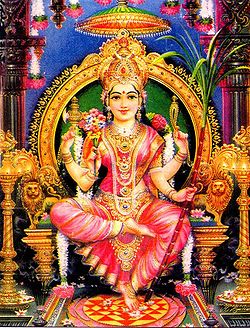
Tripura Sundari, also called Shodashi or Lalita in many traditions, expresses Devi as beauty, bliss, wisdom, and refined sovereignty. She reveals that the highest truth can appear as harmony rather than only as terror or intensity.

Bhuvaneshvari is the queen of the worlds and the vast motherly space in which creation appears. Her presence suggests expansiveness, calm authority, and the idea that the cosmos itself rests within Devi.

Bhairavi embodies fiery discipline, tapas, and transformative intensity. She is the Mahavidya who presses the seeker toward seriousness, courage, purification, and unwavering spiritual attention.
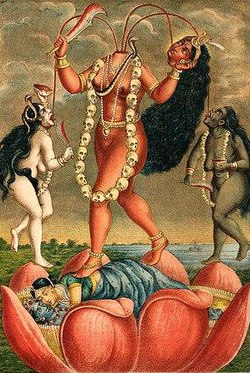
Chhinnamasta is the startling self-decapitated goddess who symbolizes sacrifice, life-force, and the mystery of giving while remaining spiritually awake. Her form is paradoxical, showing both severance and overflowing vitality at once.

Dhumavati is the smoky, widowed goddess of emptiness, disappointment, and the stripped-down truth that appears when worldly beauty and certainty have dissolved. She teaches through absence, endurance, and the wisdom of difficult endings.

Bagalamukhi is known for the power of stilling and arresting hostile force, especially speech, argument, and aggression. In devotional imagination she is the one who can stop chaos mid-motion and turn danger silent.

Matangi is linked with speech, music, knowledge beyond convention, and a sacred power that operates from the margins rather than the center. She transforms what is rejected or impure into a vehicle of wisdom and expression.

Kamala, often associated with Kamalatmika, is the lotus goddess of prosperity, abundance, beauty, and auspicious grace. Within the Mahavidyas she shows that material blessing and spiritual radiance can also belong to the wisdom of Devi.
Devotional Recitation
Argala Stotra
Argala Stotra is traditionally recited in connection with the worship of Chandika and the reading of the Devi Mahatmya. It invokes the goddess in her protective, victorious, and all-pervading forms and is especially remembered for its repeated prayer asking for beauty, victory, fame, and the removal of hostility.
Jaya tvam devi Chamunde... Rupam dehi, jayam dehi, yasho dehi, dvisho jahi.
Often recited as one of the important preparatory hymns around the Devi Mahatmya tradition.
Durga Chalisa
Durga Chalisa is one of the most widely recited devotional hymns to Goddess Durga. It praises her compassion, radiance, protective power, and many forms, and is often recited during Navaratri or in daily personal worship for courage, peace, and blessing.
Namo Namo Durge Sukh karani, Namo Namo Ambe Dukh harani.
It is especially popular in household devotion and festival recitation dedicated to Durga.
Devi Kavach
Devi Kavacham is one of the best-known protective hymns recited in connection with the Durga Saptashati. It invokes the goddess in many forms to guard the devotee from all directions and is traditionally treated as a shield of grace, strength, and safety.
Yad guhyaṁ paramam loke sarva-rakshakaram nrinam...
It is cherished as a recitation of spiritual protection before deeper Devi worship.
Keelak Stotra
Keelak Stotram is recited as part of the Devi Mahatmya tradition and is understood as removing the symbolic lock that conceals the full power of the recitation. It is often placed after Kavacham and Argala in traditional order.
Om namash Chandikayai... Sarvam etad vijaniyan mantranam api keelakam.
Its devotional meaning centers on preparing the seeker so the praise of the goddess can bear fruit fully.
Tantrokta Devi Suktam
Tantrokta Devi Suktam praises the goddess as the indwelling power present in every aspect of life: consciousness, hunger, sleep, compassion, memory, motherhood, and strength. It is among the most moving declarations of Devi’s all-pervading presence.
Namo devyai mahadevyai shivayai satatam namah...
The repeated `ya devi sarvabhuteshu` refrain makes it one of the most recognizable hymns in Devi worship.
Siddha Kunjika Stotram
Siddha Kunjika Stotram is revered as a concentrated key to the power of the Durga Saptashati. It is traditionally presented as a teaching of Shiva to Parvati and is recited for protection, success in worship, and access to the essence of the Chandi path.
Shrinu Devi pravakshyami Kunjika stotram uttamam...
Devotees often treat it as a compact yet potent recitation of great spiritual force.
Mahishasuramardini Stotram
Mahishasuramardini Stotram, often known through its opening `Aigiri Nandini`, is one of the most famous hymns in praise of Durga. It celebrates her ferocity, beauty, rhythmic power, and triumphant destruction of demonic force.
Ayi giri nandini nandita medini vishva vinodini nandinute...
This hymn is especially beloved in musical recitation and festival devotion.
Ashta Matrika
In one widely used Ashta Matrika listing, the divine mothers are Brahmani, Maheshvari, Kaumari, Vaishnavi, Varahi, Indrani, Narasimhi, and Chamunda. Together they are understood as powerful manifestations of Devi who emerge as the energies of major deities and assist in cosmic battle, protection, and the restoration of order.

Brahmani is the shakti of Brahma and is commonly described with four heads, a swan mount, and the calm authority of creation and sacred knowledge. In the Matrika traditions, she represents ordered wisdom, ritual power, and the maternal force that gives form and direction to the cosmos.

Maheshvari is the power of Shiva and is usually shown with Shaiva emblems such as the trident, serpent ornaments, crescent moon, and the bull. She carries the severe and majestic force of destruction, but in the Matrika group that fierceness becomes protective, disciplined, and aligned with divine order.

Kaumari, also called Kumari, is the shakti of Kartikeya, the god of war. She is associated with youthful martial strength, disciplined courage, and the sharp readiness needed to protect dharma, making her one of the most energetic and battle-oriented among the mother goddesses.

Vaishnavi is the shakti of Vishnu and is described with Vishnu’s attributes such as the conch, discus, mace, and lotus. Her presence within the Ashta Matrika expresses preservation, steadiness, and the sustaining intelligence that defends balance when the world is threatened by disorder.

Varahi is the boar-faced mother goddess connected with Varaha and is one of the most visually striking of the Matrikas. She is often linked with battlefield courage, nocturnal worship, and a deeply Tantric dimension of Devi, carrying both protective ferocity and sovereign power.

Indrani, also called Aindri, is the power of Indra and is associated with royal authority, thunderbolt energy, and celestial command. In Matrika worship she carries majesty, vigilance, and the ability to confront arrogance and turbulent forces with divine strength.

Narasimhi is the lion-faced power of Narasimha and is sometimes identified with or linked to Pratyangira in later traditions. She embodies fierce protective wrath, rapid intervention against danger, and the overwhelming force that can subdue chaotic violence before it spreads.

Chamunda is the fearsome mother who kills Chanda and Munda and is among the most intense figures in the Matrika tradition. With cremation-ground imagery, skull garlands, and a terrifying appearance, she reveals Devi in a form that destroys fear, ego, pestilence, and demonic force at their root.
Sacred Temples
Guwahati, Assam
Kamakhya Temple on Nilachal Hill is one of the oldest and most revered centres of Shakta worship and Tantric practice. It is revered as a Shaktipeeth, is counted among the oldest of the major pithas, and is especially associated with the Ambubachi Mela, and is distinctive for worship centered on a natural stone yoni rather than a conventional idol.
Dakshineswar, Kolkata
Built in 1855 by Rani Rashmoni on the eastern bank of the Hooghly River, this temple is dedicated to Bhavatarini, a form of Kali. It is revered here as a Siddhapeeth, and its nine-spired Bengal-style main shrine, twelve Shiva temples, and its close association with Sri Ramakrishna and Sarada Devi make it one of the best-known goddess temples in Bengal.
Kalighat, Kolkata
Kalighat is among the most important Kali shrines in eastern India and is revered as one of the 51 Shakti Peethas. Tradition connects the site with the fall of the toes of Sati's right foot, and the present temple structure dates to the early 19th century under the patronage of the Sabarna Roy Choudhury family.
Tarapith, Birbhum
Dedicated to Maa Tara, this temple is honored here as a Shaktipeeth and has long been regarded as a major centre of Tantra and Shakti worship. The shrine is deeply linked with the saint Bamakhepa and with the spiritual atmosphere of the nearby cremation ground that forms part of Tarapith's identity.
Tezpur, Assam
On the outskirts of Tezpur, Bhairabi Temple is a significant Siddhapeeth where Bhairavi is worshipped as one of the Mahavidyas. The site is also known as Bhairabi Devalaya and is associated with the legend that Usha, daughter of Banasura, regularly worshipped the goddess here. Its setting near the Brahmaputra and Kolia Bhomora Setu gives the temple a striking landscape as well as sacred presence.
Why Shakti Realm
Why I Made Shakti Realm
Shakti Realm was made to gather stories, stotras, temples, and forms of Devi into one beautiful and approachable space. Instead of making spiritual learning feel distant or difficult, the website invites people to enter gently, explore visually, and discover the goddess through story, reverence, and living tradition.
Vision
The long-term vision is to build a trusted digital realm where new seekers can begin without fear, regular devotees can return for beauty and remembrance, and spiritual products can support the journey with care. It is meant to feel devotional, premium, and sincere, so that people trust both the message and the space carrying it.
Contact and Creator
Creator Identity
Shakti Realm is a devotional and creative project shaped with sincerity, learning, and the desire to make the path of Devi easier for the new ones.
Reach Out
Share feedback, devotional ideas, quote suggestions, or collaboration thoughts through Instagram and help shape how Shakti Realm grows over time.
Visitor Reviews
Give your valuable suggestions here so that we can improve and make the path of Devi easy for the new ones.
Sources